
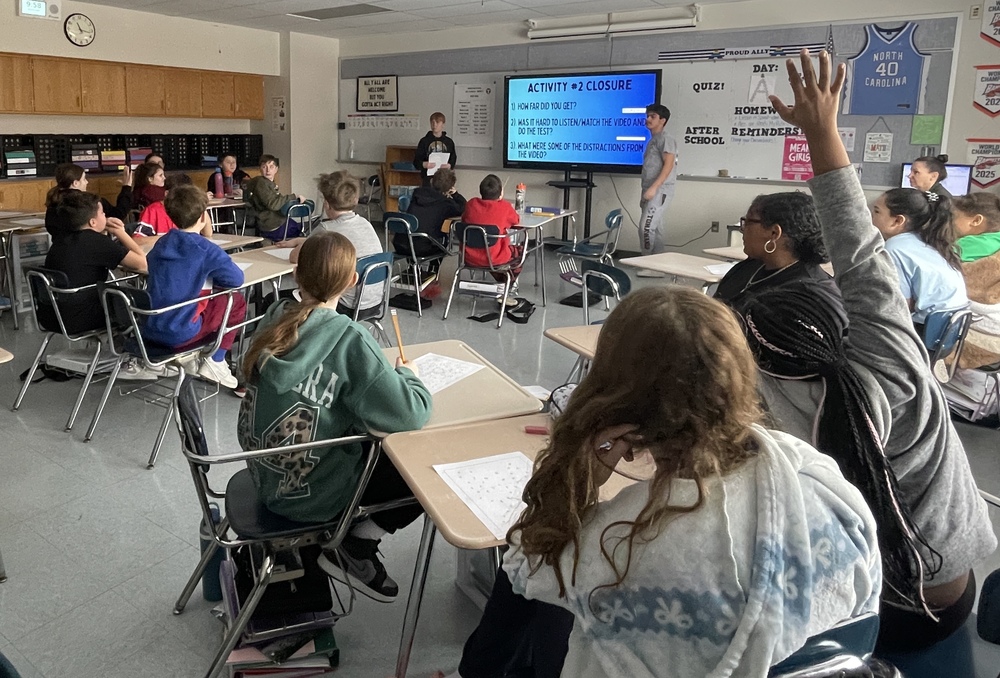
Inside a Tonawanda Middle School classroom on a snowy February day, the traditional teaching model has been turned upside down.
With limited guidance from the classroom teacher, students lead their peers in a lesson on focus. It’s part of WEB, short for Where Everybody Belongs, a new initiative this school year that puts students in the driver’s seat inside the classroom.
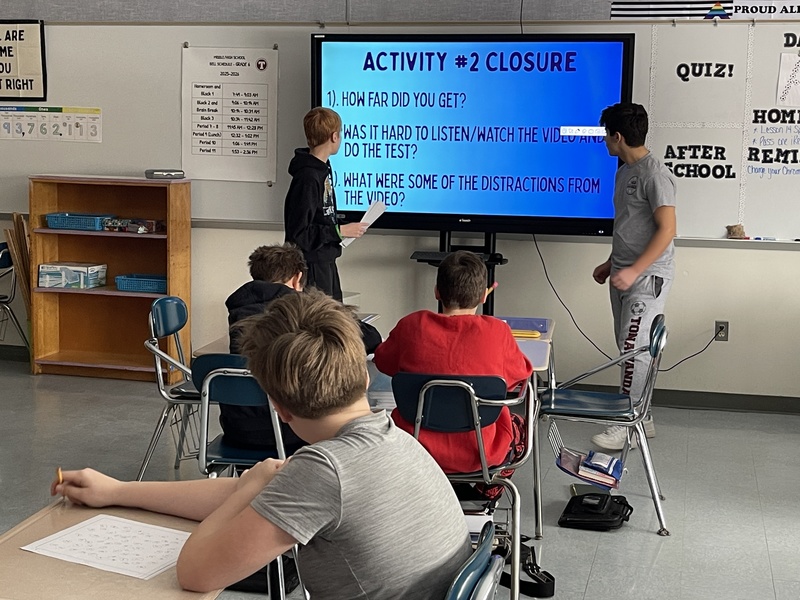
Eighth-grade WEB leaders run these character lessons in the sixth-grade classes. In this particular lesson, the WEB leaders were teaching focus, because as they explained to the students, focus drops in school in the third quarter. After a discussion with the students about what causes a loss of focus when doing homework at home, such as siblings, pets, and digital devices, they ran through several exercises to build their skills.
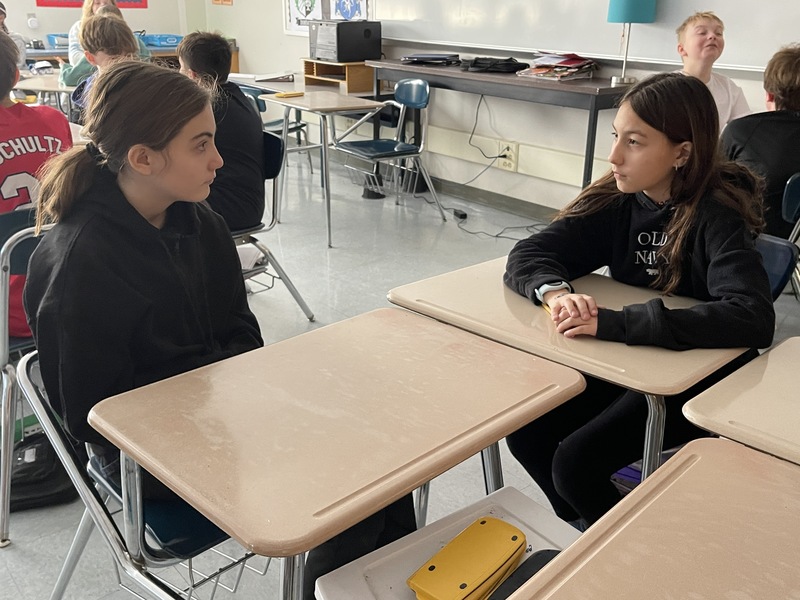
In the first, the students paired up and had to stare at each other without laughing for one minute. Next, they had to complete a task while a video played, then they completed a task with no video.
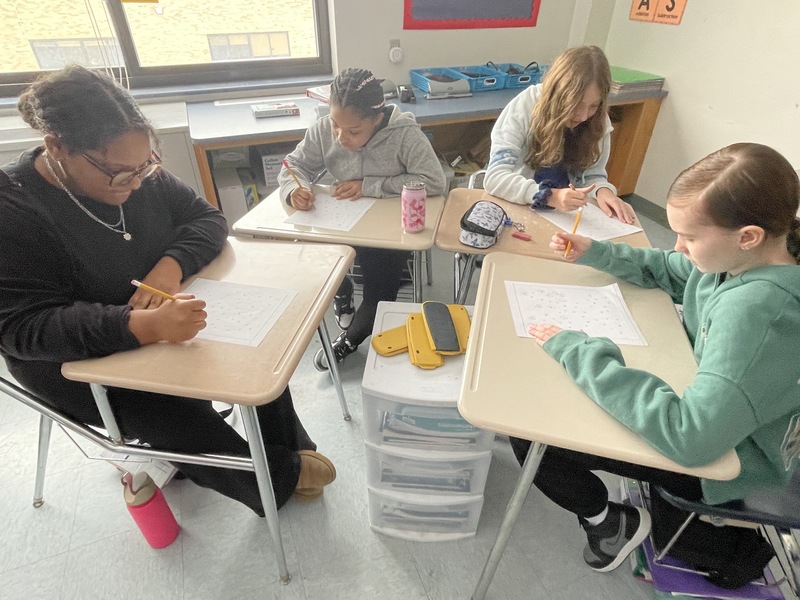
The students discussed the difference in their work with and without the video, and how much more successful they were without it.
For sixth-grader Liz’Marie Pagan, the exercise helped her realize there’s a lot more she can do to help with learning. Her classmate, Caeden Schultz, agreed.
“I should probably start studying in a calmer environment,” Schultz said.
Seventh-grade ELA teacher Leah Kane is one of the coordinators of the WEB program. She is already noticing the benefits it's having on the students.
“In sixth graders, I see increased confidence that comes with a sense of belonging,” said Kane. “For the eighth graders, I see students stepping out of their comfort zones and into leadership roles. It gives them a sense of purpose, and I am so proud of how far they've come.”
For the students, it’s a change of pace from the everyday, something both groups appreciate.
“To see kids happy when we come in, because I know school can be tiring sometimes. And to see them learning as we teach them,” said Colden Ulmer, eighth-grade WEB leader.
Previous lessons have included stress management, kindness and being helpful. WEB leaders also created locker messages this year to give “just keep swimming” notes of encouragement.
Eighth-grade WEB leaders applied to the program last school year, with 20-25 being chosen. They did their training over the summer, then applied their new skills at sixth-grade orientation.
“The summer WEB orientation for sixth graders was really successful in acclimating students to their new surroundings,” said sixth-grade teacher Julie Russo. “The WEB leaders were able to ease some of the fears students had coming in, on a level different than any adult could have provided.”
That was why eighth grader Bayar Othman wanted to get involved in the program.
“I want to help them feel welcome the same way I felt welcome when I came to the district and middle school,” Othman said.
Kane says seventh-graders are already reaching out to her about becoming WEB leaders next school year, a role she says the students need to commit themselves to.
“If a student wants to be a WEB leader, they should know that we're not just looking at academics! Responsibility and personality matter; we need kids who will show up each and every time for their sixth graders, and have fun while doing so,” said Kane.
In the future, Kane says they would like to start adding after-school social events such as game nights, where WEB leaders can spend more time with the sixth graders.
Russo said she hopes to see the program continue to grow, adding that her favorite part of the program is seeing her former students rise to the occasion and become leaders in the school.
As the WEB program expands, its impact grows, shaping Tonawanda Middle School into a place where students lead, support and learn from one another, proving that leadership and belonging go hand in hand. With each new lesson and event, WEB is not just teaching skills, but building a community where every student has a voice and a place to belong.